RESEARCH
My current research focuses on understanding how changes in climate have impacted tropical ecosystems, particularly in regions where people live. Past climates serve as analogues to understand how these regions might respond to present and future environmental changes.
Andean Temperature Amplification
Evolution of tropical land temperature over the last ~4 Ma
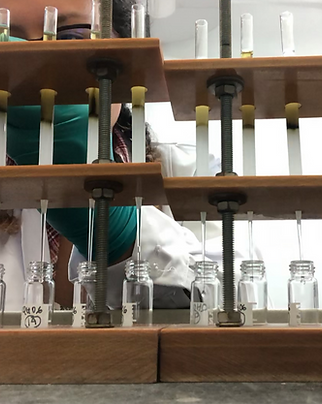
To study how tropical land temperatures have changed during the Pliocene-Pleistocene, I use bacterial lipids (brGDGTs) to reconstruct temperatures from the Bogotá Basin (~4°N). However, understanding regional responses to mechanisms such as El Niño events are crucial for accurate interpretations.
Publications: Pérez-Angel et al. 2026, Perez-Angel & Molnar, 2017.
Pliocene Hydroclimate as an analogue for future rainfall regimes
Hydrogen isotope records as tracers of tropical rainfall variability
To understand changing rainfall patterns in tropical South America across the Pliocene–Pleistocene boundary and during the onset of Northern Hemisphere glaciation, I generate and interpret hydrogen isotope records from terrestrial plant waxes.
NSF Award 2402100.
Collaboration with Fastovich et al. 2024

Isotopic Signatures of Rainfall
Modern frameworks for paleoaltimetry and paleohydrology interpretations
Modern stable isotope composition of rainfall and plant waxes in tropical regions are critical for accurately interpreting past changes in elevation and hydroclimate. Field-anchored studies in the tropics are crucial for reliable interpretations. My current research involves the continuous collection of rainfall samples for stable isotope analyses in Panamá (Bocas del Toro, Barro Colorado Island, and Panama City) and Colombia (Chocó region, Medellín, and the Eastern Cordillera).
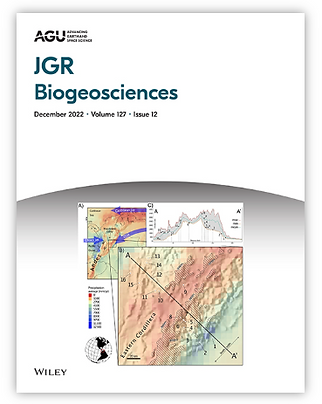
Publication: Pérez-Angel et al. 2022
NSF Award 2402100
A New Miocene Land Temperature Compilation
An all-early-career team effort
I am currently co-leading an all–early-career research team with Dr. Rachel Havranek to compile a new Miocene land temperature dataset, including a thorough assessment of the proxies used for temperature reconstructions. This compilation is part of the overall NeoTerraClim initiative led by Dr. Tamara Fletcher.
Poster: AGU 2024

Bacterial lipids as a temperature proxy
Improving tropical land temperature estimates and disentangling mixture of brGDGT sources
Membrane lipids produced by bacteria (brGDGTs) in terrestrial environments provide estimates of past temperatures. My research focuses on quantifying differences between air and soil temperatures with elevation, disentangling mixtures of various brGDGT sources in sedimentary records, and improving calibrations for tropical regions.
Publications and collaborations: Pérez-Angel et al. 2020, Martínez-Sosa et al. 2023, Novak et al. 2025
Tectonics & Paleoaltimetry
From structural geology to revisiting pollen analyses
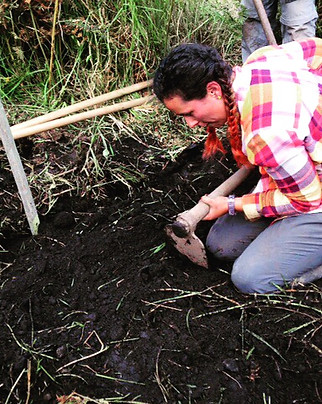
Early in my career, I began my journey in science by becoming involved in Miocene tectonic projects such as the closure of the Isthmus of Panama and the paleogeography of the Tatacoa Desert. I also worked on the structural geology of the Azuero–Sona fault zone in Panama and the paleoaltimetry of the Eastern Cordillera of Colombia.
Publications: Molnar & Pérez-Angel, 2021, Montes et al., 2015, 2021, Ortiz-Guerrero et al., 2024.
